Hannah Baker—Tony
Thirteen Reasons WhyHannah Baker—Tony is a relationship shaped by a concrete act of assistance and by the recorded message that follows it: Tony supplies Hannah with a portable voice recorder, and she later sends him the tapes. He is not one of the people whose conduct she recounts, but his help gives him a stake in the tapes’ creation and makes him part of their passage to others.
The Recorder and Hannah’s Request
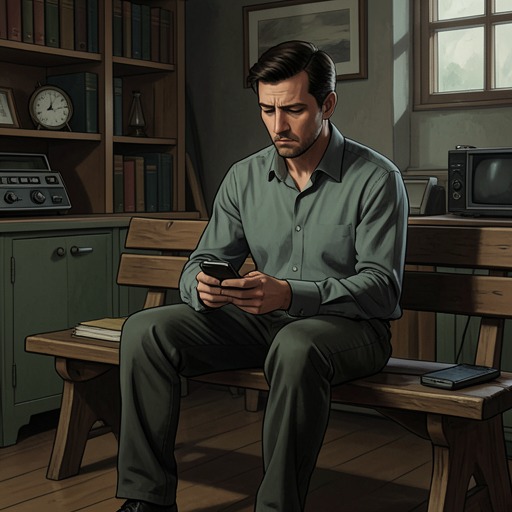
Hannah goes to Tony’s house and asks how he makes the tapes he plays in his car. When he explains that he uses his father’s old tape recorder, she asks whether he has something that can record voices—something portable that does not need to be plugged in. Tony does not ask why she needs it. Instead, he tells her to wait while he gets one. His response is practical and immediate, but the withheld question matters: he provides the means without learning what Hannah intends to record.
Tony later recognizes that Hannah’s request belonged to a larger pattern of warning signs. From his perspective, the opportunity to notice and respond had been there, yet the recorder episode itself had not made her plan clear to him. The gap between what Hannah asks for and what Tony understands gives their relationship a distinctive asymmetry: she entrusts him with a role in making the tapes, while he only gradually grasps the significance of that role.
The Package and the Tape Chain
A few days later, Tony finds a package on his porch and takes it to his room. It contains Hannah’s tapes, but at first their presence confuses him: Hannah is also at school that day, and she has left no note to explain the delivery. The package turns the earlier request into a delayed disclosure. Tony had helped make the recording possible; now he has to work out why Hannah has sent him the finished tapes.
The tapes are physically organized for sequential listening. Seven cassettes carry thirteen numbered sides: each side has its own number, and the last has a number on one side with no numbered side on the back. Hannah’s instructions tell listeners to hear all thirteen sides, rewind the tapes, return them to the box, and pass them on. She warns that she has made copies that will be released publicly if the package fails to reach everyone in the chain. Tony’s part in Hannah Baker’s recorded message is therefore not simply to receive it: the rules make each recipient responsible for its continued passage.
Tony’s Place in Hannah’s Design
When Clay asks why Hannah gave Tony the tapes, Tony says he does not know; he can only think that she chose him because he gave her the recorder and assumed he would play along. He distinguishes this practical connection from being a subject of the recordings: he is not on them, but he is still part of the process. That distinction defines the relationship’s central tension. Tony is not presented as the cause of Hannah’s story, yet his assistance and his place in the chain connect him to the way she makes that story audible.
Tony’s connection also turns on the limits of recognition. He later says Hannah came to his house and that this was his chance, recalling that the signs were present for anyone willing to notice. The account gives his help a painful retrospective weight without claiming that he understood the request at the time. Hannah’s question about recording voices had a purpose she did not disclose; Tony’s failure to ask left that purpose undiscovered until the tapes arrived.
The Tapes as a Continuing Bond
The numbered sides, the rewind-and-pass-on instructions, and the threat of public copies make Tony’s relationship to Hannah persist through a medium that can be handled, played, and sent onward. When the last side on a cassette reaches its end, the tape clicks over and continues; the quiet static beneath Hannah’s voice remains audible across seven tapes and thirteen stories. The recordings thus carry both her words and the material traces of their playback, binding the recipients into a sequence that Tony helped make possible.
For Tony, the tapes make belated understanding inseparable from responsibility. Hannah chose him in part because he had supplied the recorder, but he cannot explain the full reason for that choice. His place between the equipment and the listeners is consequently both limited and consequential: he did not author Hannah’s account, yet he helped create its means of transmission and became one of the people charged with keeping it moving.